









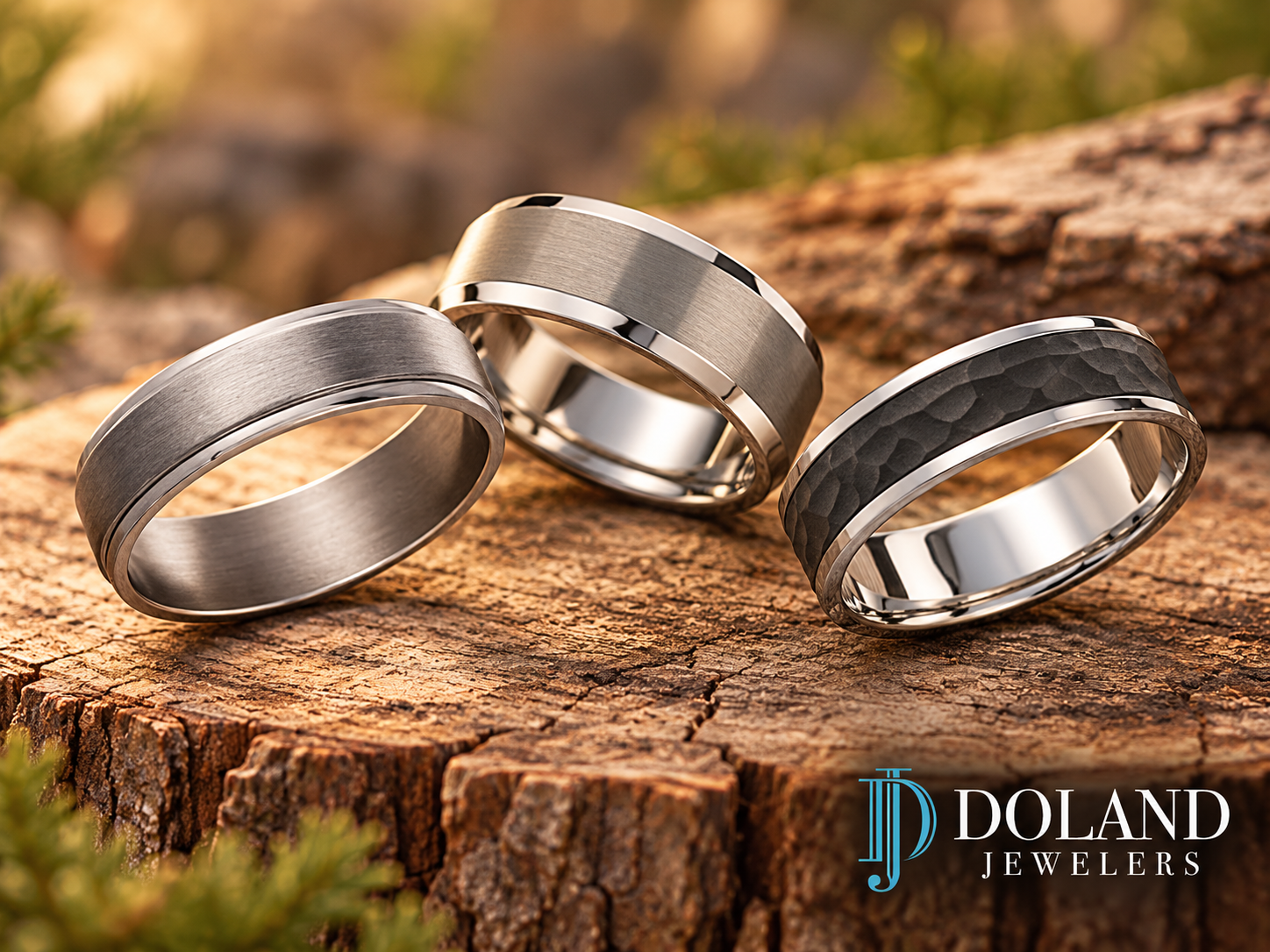

Choosing men's wedding bands gets easier once you compare metals by daily wear. Gold, platinum, palladium, titanium, tungsten, tantalum, and alternative materials all behave differently. The best choice depends on lifestyle, budget, comfort, and whether future resizing matters.
Before choosing a ring, think about how it will be worn. Someone working with tools may prioritize durability. Someone else may care more about weight, color, or the ability to resize later.
There is no single metal that works best for every groom.
The 7 Popular Metal Choices for Men's Wedding Bands
The easiest way to narrow the field is to compare how each metal feels and wears.
You can browse ourmen's wedding bandsbefore visiting the store, but trying them on is important. Weight, width, and comfort can feel very different on your hand.
-
Gold: yellow, white, or rose
Gold remains one of the most traditional choices because it is comfortable, repairable, and resizable. Yellow gold has a classic warm color. White gold gives a brighter look, while rose gold has a warmer pink tone.Gold wedding bands also give you many options for finishes, widths, and designs. -
Platinum
Platinum is dense, naturally white, and highly durable. It feels heavier than gold and can be resized by an experienced jeweler. It develops a soft patina with wear, which some people like. Platinum usually costs more because of its density and material value. -
Palladium
Palladium belongs to the platinum family and has a naturally white appearance. It is lighter than platinum and can offer a similar look without the same weight. Availability is less consistent than gold or platinum, so style choices may be more limited. -
Titanium
Titanium is strong, light, and comfortable for someone who does not want a heavy ring. It also resists corrosion well. The trade-off is sizing flexibility. Many titanium bands cannot be resized using traditional methods, so getting the original fit right matters. -
Tungsten
Tungsten is popular because it is very hard and highly resistant to scratching. It has a substantial feel and holds its finish well. However, tungsten cannot be resized like gold or platinum. If your finger size changes, the ring normally must be replaced. -
Tantalum
Tantalum is an earth metal. It is a platinum grey, corrosion-resistant metal. Tantalum has a heavy weight, similar to the weight of platinum — a characteristic that is often sought after. Unlike tungsten, ceramic, or zirconium, tantalum is remarkably resilient, free from the risk of breaking. It shares similar properties with precious metals. -
Alternative metals and materials
Damascus steel, carbon fiber, ceramic, and mixed-material bands offer distinctive looks. These styles can be durable and lightweight, but many cannot be resized or repaired conventionally. Ask about long-term service before choosing one.
The right material often comes down to what you value most.
If resizing and repair matter, gold and platinum are strong choices. If scratch resistance matters more, tungsten and tantalum may be appealing.
If weight is the deciding factor, titanium is worth trying.
Key Takeaways
There is no universal best metal. Gold and platinum offer the most traditional repair and sizing flexibility. Tungsten, titanium, and other alternatives can be durable but may not resize. Try several metals before deciding because weight and feel are hard to judge online.
What Width and Comfort Fit Should You Choose?
Band width is measured in millimeters, usually written as mm.
Even a difference of 2mm can noticeably change how a ring looks and feels. Finger size, hand size, and personal style all matter.
Common widths include:
-
4mm: slim, light, and low profile
-
6mm: balanced and the most common starting point
-
8mm: wider, heavier, and more noticeable
A 4mm band can work well for someone with smaller hands or someone who rarely wears jewelry.
A 6mm band suits many average-size hands and gives the ring more presence without feeling oversized.
An 8mm band covers more of the finger. It often suits larger hands or someone who prefers a heavier look.
Width also affects sizing.
A wide band can feel tighter than a narrow ring in the same finger size. That is why we recommend trying the actual width before ordering.
What Does Comfort Fit Mean?
A comfort-fit band is rounded slightly on the inside.
That rounded interior reduces how much metal presses against the finger. It can make wider bands easier to slide over the knuckle and more comfortable throughout the day.
Traditional-fit bands have a flatter interior.
Neither style is automatically better. The difference becomes obvious once you try both.
Key Takeaways
Start with 6mm if you are unsure about width. Move narrower or wider after seeing how it looks on your hand. Wider rings often need a slightly different fit. Comfort fit can make a noticeable difference for someone who is not used to wearing rings.
Should His and Her Wedding Bands Match?
Wedding bands can coordinate without being identical.
Some couples want matching metals and finishes. Others prefer completely different rings that still share a small design element.
You might choose the same metal but different widths. A 3mm or 4mm band can pair naturally with a 6mm men's ring.
Finish is another way to coordinate.
For example, both rings might use polished yellow gold. Another couple might choose matching brushed finishes even though the ring designs are different.
You can also repeat a design detail, such as a milgrain edge, engraving, or small diamond accent.
The goal is not to force two people with different tastes into matching jewelry.
If you want to coordinate both rings, browse ourladies' wedding bandsalong with the men's styles.
Seeing both rings together often makes the decision easier.
Which Wedding Band Metals Can Be Resized?
Resizing is one of the biggest practical differences between wedding band metals.
Finger size can change over the years. Weight changes, age, temperature, and joint changes can all affect fit.
Gold is one of the easiest materials to resize.
Platinum is also resizable, although working with it requires different tools and techniques.
Palladium may be resizable depending on the construction of the ring.
Titanium, tungsten, tantalum, and alternative materials require more caution.
A tungsten ring generally cannot be cut and resized traditionally. Many titanium and alternative-material bands have the same limitation.
That does not automatically make them bad choices.
It simply means you should understand the trade-off before buying.
Durability Does Not Mean Indestructible
Every material wears differently.
Gold can scratch and gradually wear over decades, but a jeweler can polish, repair, and rebuild it.
Platinum scratches too, although much of the metal is displaced rather than lost.
Tungsten resists scratching extremely well, but its hardness also makes it less flexible.
Alternative materials may resist everyday wear but offer fewer repair options if something happens.
At Doland Jewelers, we can explain how a specific band should be maintained before you purchase it.
If a traditional ring later needs attention, ourring sizing and repairservices are handled in house.
Budgeting for the wedding as a whole? Ourengagement ring price guideexplains the major factors that affect engagement ring pricing.
Key Takeaways
Think beyond how the ring looks today. Gold and platinum provide the greatest resizing and repair flexibility. Tungsten and many contemporary materials usually require replacement if your finger size changes. Durability and serviceability are not the same thing.
Frequently Asked Questions
What metal is best for a men's wedding band?
There is no single best metal. Gold and platinum work well for buyers who want a traditional ring that can be resized and repaired. Titanium is light and strong, while tungsten offers excellent scratch resistance. Tantalum and alternative materials provide other looks and weights. Consider your job, daily activities, desired weight, and whether future sizing is important before choosing.
Can a tungsten ring be resized?
No. Tungsten is extremely hard, which helps it resist scratches but prevents traditional resizing. If your finger size changes, the ring is generally replaced rather than cut and altered. Some manufacturers offer size-exchange programs. If future resizing is important, consider gold or platinum instead. Trying the correct width and size before ordering is especially important with tungsten.
How wide should a men's wedding band be?
Most men's bands are between 4mm and 8mm wide. A 4mm ring has a slimmer profile, while 6mm is a common middle ground. An 8mm band has more presence and often works well on larger hands. Wider rings can feel tighter than narrow ones, so the best approach is to try several widths in the same visit.
Can you match my band to my partner's ring?
Yes. The two rings can coordinate without being identical. Couples often match the metal while choosing different widths or designs. Another option is using the same polished, brushed, or matte finish. Small details such as engraving or edge treatments can also connect the rings. Bring your partner's ring or inspiration photos so we can compare styles together.
Do you carry men's wedding bands in store?
Yes. Doland Jewelers carries men's bands in traditional precious metals and a selection of contemporary materials at both locations. Trying rings in person is useful because width, weight, finish, and comfort can be difficult to judge online. We can compare several styles on your hand and discuss custom options when you want something more specific.
Visit Doland Jewelers
The best way to choose a wedding band is to put several options on your hand.
At Doland Jewelers, you can compare different metals, widths, weights, and finishes before making a decision. We can also explain which materials can be resized or repaired later.
Dubuque
1735 J.F.K. Rd
Dubuque, IA
(563) 583-7936
Davenport
3865 Elmore Ave
Davenport, IA
(563) 326-1847
Visit either location to try bands in person and narrow down what feels right for everyday wear.
Key Takeaways
Choose your band for daily life, not just appearance. Consider weight, width, durability, and future resizing. Try several metals and widths before ordering. A few minutes of comparison usually makes the differences much clearer.